Tuesday, 6 March 2012

The Future of Manufacturing

manufacturing

Manufacturing has a key role to play in economic growth, particularly in driving exports and productivity, and in rebalancing the UK economy. It also brings a number of other benefits to the UK in terms of societal value and contribution to national resilience.

The nature of manufacturing and its role in the UK and global economies is going through a period of change.

As with a number of developed economies, the manufacturing share of the UK economy has declined, from 22% of GDP in 1990 to around 10% today. New industries and technologies are emerging. There is increased competition and changing demand for products and services.

The Future of Manufacturing project will provide a timely and fresh look at the long-term picture for the manufacturing sector out to 2050, investigating global trends and drivers of change.

Leading experts

The project calls on industry and academic expertise from the UK and abroad to explore how the UK can maximise key opportunities and mitigate risks. In doing so, it will provide a robust evidence base to help ensure that policy decisions taken today are resilient in an uncertain future.

The Government Office for Science Foresight programme leads the project, under the direction of the Government Chief Scientific Adviser, Professor Sir John Beddington. Vince Cable, Secretary of State for Business, Innovation and Skills, is the project sponsor Minister.

A Lead Expert Group (LEG) of eminent academic and private sector experts from a range of disciplines works alongside the Foresight team to help guide the project and secure a strong evidence base. A High Level Stakeholder Group (HLSG), chaired by Vince Cable, will advise on the strategic direction and impact. Find out more about the LEG. Members of the HLSG will be announced in early 2012.

The project’s fresh thinking, innovative evidence base and futures analysis will help inform policy makers in the Department for Business, Innovation and Skills and a range of other relevant departments throughout the project and beyond.


Technology and Innovation Futures: Growth Opportunities for the 2020s

Technology and Innovation Futures (PDF, 824 Kb) is a forward look at a range of developments which have the potential over the next 20 years to support sustained economic growth in the UK. As the UK comes out of the economic downturn, it seems likely that future economic prosperity will derive in large part from seizing opportunities offered by technologies such as these.

The report concludes that there are strong opportunities for growth in the UK economy through the 2020s if businesses can harness scientific and industrial capabilities to take advantage of technology developments and identifies three potential areas of growth which could be transformative: manufacturing, infrastructure and the internet.

Other areas highlighted by the report are the energy transition which the UK will undergo during the next 10-20 years, the UK’s R&D efforts in new materials which could help realise the move to a low carbon economy, the potential of the market for regenerative medicine and the increasing importance of intellectual property - all of which offer opportunities for UK companies.

The evidence base used in the TIF project was gathered by deskwork, interviews with 25 leading figures from research and business, and five workshops involving 150 academics, industrialists, experts from the private sector and Government. The workshops used a range of futures techniques to provoke and structure discussions and the outputs of the workshops were considered and refined through further desk-work.

Click technology annex.

Sunday, 4 March 2012

programme this summer to evaluate open-rotor jet engines
GE and NASA to begin wind-tunnel test programme this summer to evaluate open-rotor jet engines | GE, CFM, open rotor engines, engines

The refurbished NASA test rig (photo: GE)
Following the refurbishment of a special test rig at NASA’s Glenn Research Center in Cleveland, Ohio, engine manufacturer GE Aviation and NASA will begin wind-tunnel testing of counter-rotating fan-blade systems for open-rotor jet engine designs this summer. The open-rotor engine has been touted by both GE and rival Rolls-Royce as a possible next-generation engine for narrowbody aircraft because of its potential for substantial reductions in fuel consumption and emissions of CO2 and NOx. However, the prime challenge for them both is to arrest the significant increase in engine noise levels posed by the open design.
NASA’s test rig was actually used in the 1980s when NASA and GE first tested scale-model, counter-rotating fan systems that led to the development of the open-rotor GE36 engine. GE successfully ground-tested and flew an open-rotor jet engine – then called an unducted fan (UDF) – that demonstrated fuel savings of more than 30% compared to similar-sized, conventional engines. The design was prompted by a surge in the oil price at the time but was shelved once the price fell back.
Although a similar scenario has been repeated with the price of crude oil falling from a peak of nearly $150 per barrel to nearer $30 earlier this year, circumstances are different this time round. The price has now risen sharply back to around $70 and could go higher still once the global recession begins to play itself out and, as important, the environmental imperative is so much stronger now than it was over 20 years ago.
GE says it has dramatically advanced its computational aero-acoustic analysis tools since then to better understand and improve open-rotor systems. The manufacturer stresses the programme will not involve full engine testing but will be a component rig test to evaluate subscale fan systems.
GE and the Fundamental Aeronautics Program of NASA’s Aeronautics Research Mission Directorate in Washington are jointly funding the testing, with Snecma of France – GE’s partner in CFM International – participating with fan blade designs. For the NASA testing, which will essentially re-enact the 1980s tests, GE will run two rows of counter-rotating fan blades, with 12 blades in the front row and 10 blades in the back row.
As new and more exotic fan blade designs are run in the wind tunnel, GE and NASA say they will be able to better understand how these designs will perform in an actual operating environment.
“These tests will help to tell us how confident we are in meeting the technical challenges of an open-rotor architecture. It’s a journey driven by a need to sharply reduce fuel consumption in future aircraft,” said David Joyce, President of GE Aviation.
Open-rotor jet engine designs are among the longer-term technologies being evaluated for LEAP-X, CFM International’s technology programme focusing on future advances for next-generation CFM56 engines.
Boeing Successfully Flies Fuel Cell-Powered Airplane
test flight of a manned airplane powered by hydrogen fuel cells


test flight of a manned airplane powered by hydrogen fuel cells

Boeing announced that it has, for the first time in aviation history, flown a manned airplane powered by hydrogen fuel cells.

The recent milestone is the work of an engineering team at Boeing Research & Technology Europe (BR&TE) in Madrid, with assistance from industry partners in Austria, France, Germany, Spain, the United Kingdom and the United States.

"Boeing is actively working to develop new technologies for environmentally progressive aerospace products," said Francisco Escarti, BR&TE's managing director. "We are proud of our pioneering work during the past five years on the Fuel Cell Demonstrator Airplane project. It is a tangible example of how we are exploring future leaps in environmental performance, as well as a credit to the talents and innovative spirit of our team."

A fuel cell is an electrochemical device that converts hydrogen directly into electricity and heat with none of the products of combustion such as carbon dioxide. Other than heat, water is its only exhaust.

A two-seat Dimona motor-glider with a 16.3 meter (53.5 foot) wingspan was used as the airframe. Built by Diamond Aircraft Industries of Austria, it was modified by BR&TE to include a Proton Exchange Membrane (PEM) fuel cell/lithium-ion battery hybrid system to power an electric motor coupled to a conventional propeller.

Three test flights took place in February and March at the airfield in Ocaña, south of Madrid, operated by the Spanish company SENASA.

During the flights, the pilot of the experimental airplane climbed to an altitude of 1,000 meters (3,300 feet) above sea level using a combination of battery power and power generated by hydrogen fuel cells. Then, after reaching the cruise altitude and disconnecting the batteries, the pilot flew straight and level at a cruising speed of 100 kilometers per hour (62 miles per hour) for approximately 20 minutes on power solely generated by the fuel cells.

According to Boeing researchers, PEM fuel cell technology potentially could power small manned and unmanned air vehicles. Over the longer term, solid oxide fuel cells could be applied to secondary power-generating systems, such as auxiliary power units for large commercial airplanes. Boeing does not envision that fuel cells will ever provide primary power for large passenger airplanes, but the company will continue to investigate their potential, as well as other sustainable alternative fuel and energy sources that improve environmental performance.

BR&TE, part of the Boeing Phantom Works advanced R&D unit, has worked closely with Boeing Commercial Airplanes and a network of partners since 2003 to design, assemble and fly the experimental craft.

The group of companies, universities and institutions participating in this project includes:

  • Austria -- Diamond Aircraft Industries
  • France -- SAFT France
  • Germany -- Gore and MT Propeller
  • Spain -- Adventia, Aerlyper, Air Liquide Spain, Indra, Ingeniería de Instrumentación y Control (IIC), Inventia, SENASA, Swagelok, Técnicas Aeronauticas de Madrid (TAM), Tecnobit, Universidad Politécnica de Madrid, and the Regional Government of Madrid
  • United Kingdom -- Intelligent Energy
  • United States -- UQM Technologies.

Tuesday, 28 February 2012

Hydrogen fuel cell powered jet takes flight!


An unmanned, hydrogen fuel cell powered jet engine made its high-pitched debut earlier this today. Which, according to the group of developers behind it, makes it the world's first environmentally friendly jet engine.

They don't seem to have been content with simply getting the jet off the ground, the pushing itself to a top speed of 700km per hour, and even performed a few aerial acrobatics (click on above title to see video).

Horizon Fuel Cell Technologies Inc see the technology winding up in other unmanned fly machines (military recon, mapping, search and find, etc) which they say would be capable of 30 hour flight times.

General Electric (GE) have not officially made a comment, but when I emailed Mark Dunn, a Senior Aerospace Engineer I know who works for GE, said:

'We have informal plans in the works, but there's no reason - if we start now -why we shouldn't get a full scale commercial airliner HydroJet prototype up and running by 2012.'

My estimate, technically speaking, is that we could replace all conventional gas guzzling, CO2 emitting, commercial jet turbines replaced by 2020.

I foresee a real scramble coming between the commercial jet heavy weights.

RR V GE Hydrogen Jet Engine development will be the biggest aerospace boxing bout of the early 21st century.

And Hay! We can all go on far away holidays again, without denting our conscience - and planet - anymore.

Tuesday, 21 February 2012

MonoSol Creates Innovative Dissolvable Packaging To Combat Waste

Single-serve drink mixes and individually wrapped foods are a boon for landfill enthusiasts. Dissolvable-packaging maker MonoSol has a fix. Can you stomach it?

I'm eyeing the clear packet of hot chocolate, marked confidential & proprietary, I just dropped into a mug of steaming water. As I stir, bits of the plasticlike wrapper float to the top. The cocoa creeps out in waves. And then, in an instant, the remnants of the casing simply . . . disappear.

‘It's safe,’ assures the man to my side, who's holding a cup of the same. ‘Go ahead, try it.’

‘You first,’ I reply. We both chuckle, and take a sip.

Soon we may all be drinking what CEO P. Scott Bening and his materials-science shop MonoSol are serving. The company's water-soluble wrappers can be found encasing everything from clothing to pesticides to detergent, such as the Tide Pods Procter & Gamble will launch in the U.S. this month with a $150 million marketing push. ‘Our films are already in your laundry room and kitchen,’ says Bening, between drinks. Now he wants to bring them to your mouth.

Branding experts Karin Hibma and Michael Cronan suggest ways to convince it's okay to ‘eat plastic.’

Invoke nature: ‘Fruit has packaging in the form of skin, and we don't think twice about eating it," says Hibma. "MonoSol should emphasize that in its marketing.’

Add nutrients. ‘Edible casing that's merely neutral is bad," says Cronan. "Even if MonoSol just adds a few electrolytes, the film will be an easier sell.’

Make it relatable ‘Picture a TV ad showing a food wrapper that blows away from a dump, tumbles across fields, and winds up in your hand," says Cronan. "If this packaging eliminates that waste, it's a powerful message.’

Deep within its two northwest Indiana labs, MonoSol has been developing edible films that are soluble, biodegradable, even flavorable.

‘A blow-up view would kind of look like a brick of Ramen noodles,’ says Jon Gallagher, MonoSol's new product development manager. ‘Once there's water penetration, the molecular bonds loosen up.’ Until that point, the material is strong enough to serve as packaging for food. It's a wrapper until it isn't.'

At Last!


Sunday, 19 February 2012


DNA Sequencing Device Meant to Be Portable, Disposable and Cheap


DNA sequencing is becoming both faster and cheaper. Now, it is also becoming tinier.

A British company said on Friday that by the end of the year it would begin selling a disposable gene sequencing device that is the size of a USB memory stick and plugs into a laptop computer to deliver its results.

The device, expected to cost less than £600, could allow small sequencing jobs to be done by researchers who cannot afford the £40,000 to £500,000 needed to buy a sequencing machine.

It might also help doctors to sequence genes at a patient’s bedside, wildlife biologists to study genes in the field, or food inspectors to identify pathogens.

“You don’t need to buy instruments,” Clive G. Brown, the chief technology officer of the company, Oxford Nanopore Technologies, said in an interview. “It’s pay-as-you-go sequencing.”

Oxford presented details of the device, as well as of a new, somewhat larger sequencer that it also plans to begin selling late this year, at the Advances in Genome Biology and Technology conference in Marco Island, Fla., which has become the sequencing industry’s annual boast-fest.

See link: http://www.nanoporetech.com/


Friday, 10 February 2012

Oxford Martin Program on the Impacts of Future Technology | Eric Drexler explores physical law and future of Nanotech


Oxford Future of Humanity Institute | Dr. Eric Drexler speaks at the Inaugural Lecture of the Oxford Martin Program on the Impacts of Future Technology. Introduced by Professor Nick Bostrom: “Exploring a Timeless Landscape: Physical Law and the Future of Nanotechnology”

In the inaugural lecture of the Oxford Martin Programme on the Impacts of Future Technology, Eric Drexler explores the implications of physical law for the future potential of nanotechnology, then describes the prospects for productive technologies that can solve global problems on the scale of climate change.

Abstract | A methodology grounded in physics and engineering can answer a limited yet illuminating range of questions about the potential of physical technology. This line of inquiry leads to a crucial question: What can physics tell us about the potential of advanced nanotechnologies? Well-established physical principles show that this potential embraces productive nanotechnologies that have the potential to transform the material basis of civilization. This prospect calls for re-evaluating both research opportunities and broader choices with consequences for the human future.

Oxford Martin Program on the Impacts of Future Technology | The Oxford Martin Programme on the Impacts of Future Technology, launched in September 2011, is an interdisciplinary horizontal Programme within the Oxford Martin School in collaboration with the Faculty of Philosophy at Oxford University. The Program, which is directed by Professor Nick Bostrom, works closely with the Future of Humanity Institute; the Institute for the Future of Computing, the Oxford University Computing Laboratory (Professor Bill Roscoe) and the Oxford e-Research Centre (Professor Anne Trefethen); the Institute for Science and Ethics (Professor Julian Savulescu); and other Oxford Martin School Institutes. Professor David Deutsch (Department of Atomic and Laser Physics, Centre for Quantum Computation, Clarendon Laboratory) serves as a senior consultant.

The Oxford Martin Program on the Impacts of Future Technology analyzes possibilities related to long-range technological change and the potential social impacts of future transformative technologies. Research foci include issues related to the future of computing, existential risks, and methodology, including the following areas: Changing rates of change; Automation and complexity barriers; Machine intelligence capabilities and safety; Novel applications and unexpected societal impacts: Predictability horizons; and Existential risks and future technologies.

We are developing new research into the impact on societies of transformative technological change and the implications of the development of disruptive technologies, including extreme computing and the longer term implications of advances in the biosciences. Technological advancement has always been a major driver of social change. As our rate of technological innovation accelerates, it is vital to understand the nature of technological change, its directions and possible impacts for humanity.

Tuesday, 6 September 2011

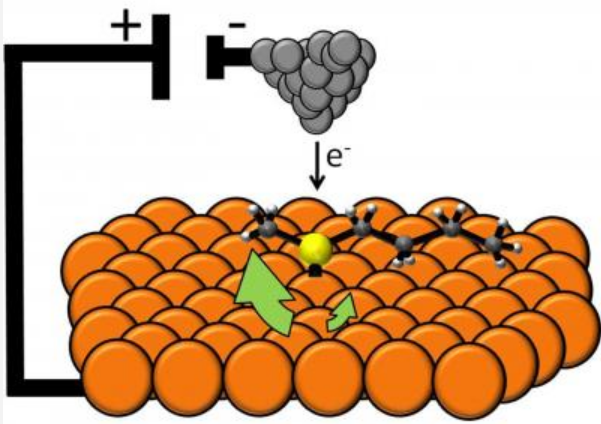
World’s smallest electric motor made from a single molecule


[+]

Single-molecule electric motor (credit: Heather L. Tierney et al./Nature Nanotechnology)


Chemists at Tufts University‘s School of Arts and Sciences have developed the world’s first single-molecule electric motor, which may create a new class of devices used in medicine and engineering.


It measures a mere 1 nanometer across (the current world record is a 200 nanometer motor).

Saturday, 30 July 2011

6 Futurecasts to think about!

Forecast #1: The Race for Genetic Enhancement Will Be What the Space Race Was in the 20th Century—Genetic therapies and biomedical enhancements will be a multibillion-dollar industry. New techniques will enable doctors to change your DNA to revitalize old or diseased organs, enhance your appearance, increase your athletic ability, or boost your intelligence.

Forecast #2: Water Becomes the New OilWater desalination may soon become one of the world’s largest industries. By 2040, at least 3.5 billion people will run short of water—almost 10 times as many as in 1995. The huge demand, plus new more efficient desalination technologies, will create enormous profit opportunities and bring new life to arid regions.

Forecast #6
Invention Becomes Automated

Tomorrow’s inventors won’t toil away in workshops painstakingly building, testing and refining their creations. Instead, the Edisons of the next decade will spend their days writing descriptions of the problems they want to solve, and then hand those descriptions to computers to work out the solutions.

This technology has already designed a successful antenna for a NASA space mission and invented innovative consumer products. It promises to spark a revolution in innovation and allow non-technical people to become inventors.

Forecast #3: WiMAX Networks Will Soon Create Country-Wide Wireless Internet AccessOften described as “Wi-Fi on steroids,” WiMAX (Worldwide Interoperability for Microwave Access) will cover entire countries with a vibrant, high-speed wireless communications network. Internet access and other data and video applications will be available anywhere with many applications for automobiles.

Forecast #4: By 2025, the Worldwide Average Life-Span Will Be Extended by One year Per YearOnly 15% of deaths worldwide will be due to naturally occurring infectious diseases.

Forecast #5: Bioviolence Becomes a Greater ThreatIn the next decade, biological technologies that were once at the frontiers of science will become available to anyone with minimal scientific training. Emerging biotechnologies, such as genomics and nanotechnology, will allow bacteria and viruses to be altered to increase their lethality or make them more resistant to antibiotics.

My concern is that most people, governments, and news media know little to nothing about these and many other breakthrough trends! Wake up of you'll be left behind.

Any guesses what the picture in the right-hand corner is about? More next week!

Wednesday, 27 July 2011

Un-Rules For Creativity.

1. Avoid rules. Avoid order. Don't just embrace chaos, but create a little bit of it. Constant change, from the top-down, keeps people nimble and flexible (and shows that you want constant change).

2. Give yourself and your team permission to be creative. Permission to try something new, permission to fail, permission to embarrass yourself, permission to have crazy ideas.

3. Hire weird people. Not just the tattoo'd and pierced-in strange-places kind, but people from outside your industry who would approach problems in different ways than you and your normal competitors.

4. Meetings are a necessary evil, but you can avoid the conference room and meet people in the halls, the coffee m/c, or their car. Get out, go on hunter-gatherer knowledge/idea/experience expeditions (foreign countries, out-there expos, futurist events). Make meetings less about delegation and task management and more about cross-pollination of ideas (especially the weird ideas). This is a lot harder than centralised, top-down meetings. But this is your job; deal with it.

5. Structure your company to be flexible. Creativity is often spontaneous, so the whole company needs to be able to pivot quickly and execute on them (see #1).

Saturday, 16 July 2011

New Idea!...The Devils’ Advocate!!…. Not!!!
.


Why should you not assume the ‘Devil’s Advocate’ during a creativity session or when a new idea is first proposed?....
.


It’s often put forward when a new idea is shed, ‘Let me for a moment be the Devil’s Advocate.’
.


So....why should you not allow that to happen?
.


Because it assumes the most negative possible perspective, one that sees only the down side, the side, the problems, the disasters in the wings. And when that happens the rest of the pack follow suit, in turn adopt the killer instinct, and the new idea is drown in negativity.
.


So, if any one does say, ‘Hold on a moment, let me play Devil’s Advocate.’
.


The replay could be along the lines: ‘Well, I would welcome you to play an Angles Friend!’


Phone Hacking was not only inevitable given time, this is merely the beginning....But here’s a solution that may begin to address the problem!

Modern mobile phones are no longer phones!


In fact, the gadget we hold in our hand has now become a very powerful computer systems.


The device in question now includes such technologies as: operating systems, read-only-memory, high level and smart software, intelligent applications; along with the traditional kit that allows us to communicate around world at a press of button.


But most importantly, these electronic tools contain evermore powerful databases. Databases that are exponentially increasing in data storage capacity and flexibility.


And this is central here.


The databases hold much of the data about our personal lives. And as has been made clear in the news these past weeks, they are beginning to open to caldensdined factions.


Further, you can bet that those malevolent gangs and juvenile delinquents will begin to launch software apps that make remote Hacking ever easier.


Remember, a mere 10 years ago, cell-phone technology at this level of sophistication didn’t exist. And in as little 5 years from now the level sophistication in Smartphones (as we know them) will be orders of magnitude more powerful.


The phone will be a supercomputer in your grip.


Think of this: 40 years ago, the American early warning defence system, the Q7 Mainframe, took up the area the size of a football pitch. It had a huge, deep underground, temperature controlled, environment to accommodate it. A high-tech staff of many hundreds to control and support it. And the cost of design and maintainance of such a system took many billions of pounds.


Today, we have Smartphones! Smartphones in local shops that have 10,000 times the computing power of the Q7, and all for the price of £300.


And that’s the speed of the change!


You can perhaps see – just as with the long-established Personal Computer connected to the Internet – Hacking is going to spread rapidly into the public domain via the roughly 3 billion (so far) Smartphones that are out around the planet.


As I said, this was inevitable given time.


One solution is not to carry a Smartphone. But to uses a basic phone, and then too have a completely independent, not connectable, old fashioned device that can be used as a sophisticated database.


An even better technical solution to the Hacking Problem.


In fact, if Apple, Samsung, and the like, got their design hats on, they could readily design a Smart Communion Device with ‘3 Separate Systems in One Unit’ that would go some way to solving the problem.


As follows:


System 1 is the phone system, and there’s no reason way you cannot download functional applications like music, games, pictures, videos, etc, into this first system. This is because this information is either discreet (as in careful what you say) or innocuous data.


System 2 is the data message receive/send unit. This system can be secured via Public Key Encryption Algorithms (technology that give you the ability to authenticate data, keep unwanted information locked out. And data that can be securely sent to another peer.) Messages and media such as telephone numbers, personal messages, Facebook sessions, Groupon accounts, et al, can be securely stored.


System 3 is your physically separate multimedia database where you can store your privet records, where no one can get into the files, folders or accounts (as long as you use your P.I.N security lock). Nobody can get in because it is isolated electronically, magnetically and mechanically to the outside world.


It will mean that you will have to transfer long-term records (e.g.; recently received phone numbers, e-mails, diary accounts, etc) manually. But the price of doing this will be worth it. You will have a range productivity apps, like write to screen, diary, notebook, camera, video, etc. But only you will be able to view and download to local devices.


Conclusion.


This will impede the potential theft of private and personal records, and therefore the further networking of salacious gossip; hinder the leaking of family and work information; put a road block on information based business espionage – and I have to say – prohibit the future disclosure of government and domestic security information.