
Tuesday, 6 March 2012


Sunday, 4 March 2012
| programme this summer to evaluate open-rotor jet engines | |||
Following the refurbishment of a special test rig at NASA’s Glenn Research Center in Cleveland, Ohio, engine manufacturer GE Aviation and NASA will begin wind-tunnel testing of counter-rotating fan-blade systems for open-rotor jet engine designs this summer. The open-rotor engine has been touted by both GE and rival Rolls-Royce as a possible next-generation engine for narrowbody aircraft because of its potential for substantial reductions in fuel consumption and emissions of CO2 and NOx. However, the prime challenge for them both is to arrest the significant increase in engine noise levels posed by the open design. NASA’s test rig was actually used in the 1980s when NASA and GE first tested scale-model, counter-rotating fan systems that led to the development of the open-rotor GE36 engine. GE successfully ground-tested and flew an open-rotor jet engine – then called an unducted fan (UDF) – that demonstrated fuel savings of more than 30% compared to similar-sized, conventional engines. The design was prompted by a surge in the oil price at the time but was shelved once the price fell back. Although a similar scenario has been repeated with the price of crude oil falling from a peak of nearly $150 per barrel to nearer $30 earlier this year, circumstances are different this time round. The price has now risen sharply back to around $70 and could go higher still once the global recession begins to play itself out and, as important, the environmental imperative is so much stronger now than it was over 20 years ago. GE says it has dramatically advanced its computational aero-acoustic analysis tools since then to better understand and improve open-rotor systems. The manufacturer stresses the programme will not involve full engine testing but will be a component rig test to evaluate subscale fan systems. GE and the Fundamental Aeronautics Program of NASA’s Aeronautics Research Mission Directorate in Washington are jointly funding the testing, with Snecma of France – GE’s partner in CFM International – participating with fan blade designs. For the NASA testing, which will essentially re-enact the 1980s tests, GE will run two rows of counter-rotating fan blades, with 12 blades in the front row and 10 blades in the back row. As new and more exotic fan blade designs are run in the wind tunnel, GE and NASA say they will be able to better understand how these designs will perform in an actual operating environment. “These tests will help to tell us how confident we are in meeting the technical challenges of an open-rotor architecture. It’s a journey driven by a need to sharply reduce fuel consumption in future aircraft,” said David Joyce, President of GE Aviation. Open-rotor jet engine designs are among the longer-term technologies being evaluated for LEAP-X, CFM International’s technology programme focusing on future advances for next-generation CFM56 engines. |


Boeing Successfully Flies Fuel Cell-Powered Airplane


Boeing announced that it has, for the first time in aviation history, flown a manned airplane powered by hydrogen fuel cells.
The recent milestone is the work of an engineering team at Boeing Research & Technology Europe (BR&TE) in Madrid, with assistance from industry partners in Austria, France, Germany, Spain, the United Kingdom and the United States.
"Boeing is actively working to develop new technologies for environmentally progressive aerospace products," said Francisco Escarti, BR&TE's managing director. "We are proud of our pioneering work during the past five years on the Fuel Cell Demonstrator Airplane project. It is a tangible example of how we are exploring future leaps in environmental performance, as well as a credit to the talents and innovative spirit of our team."
A fuel cell is an electrochemical device that converts hydrogen directly into electricity and heat with none of the products of combustion such as carbon dioxide. Other than heat, water is its only exhaust.
A two-seat Dimona motor-glider with a 16.3 meter (53.5 foot) wingspan was used as the airframe. Built by Diamond Aircraft Industries of Austria, it was modified by BR&TE to include a Proton Exchange Membrane (PEM) fuel cell/lithium-ion battery hybrid system to power an electric motor coupled to a conventional propeller.
Three test flights took place in February and March at the airfield in Ocaña, south of Madrid, operated by the Spanish company SENASA.
During the flights, the pilot of the experimental airplane climbed to an altitude of 1,000 meters (3,300 feet) above sea level using a combination of battery power and power generated by hydrogen fuel cells. Then, after reaching the cruise altitude and disconnecting the batteries, the pilot flew straight and level at a cruising speed of 100 kilometers per hour (62 miles per hour) for approximately 20 minutes on power solely generated by the fuel cells.
According to Boeing researchers, PEM fuel cell technology potentially could power small manned and unmanned air vehicles. Over the longer term, solid oxide fuel cells could be applied to secondary power-generating systems, such as auxiliary power units for large commercial airplanes. Boeing does not envision that fuel cells will ever provide primary power for large passenger airplanes, but the company will continue to investigate their potential, as well as other sustainable alternative fuel and energy sources that improve environmental performance.
BR&TE, part of the Boeing Phantom Works advanced R&D unit, has worked closely with Boeing Commercial Airplanes and a network of partners since 2003 to design, assemble and fly the experimental craft.
The group of companies, universities and institutions participating in this project includes:
- Austria -- Diamond Aircraft Industries
- France -- SAFT France
- Germany -- Gore and MT Propeller
- Spain -- Adventia, Aerlyper, Air Liquide Spain, Indra, Ingeniería de Instrumentación y Control (IIC), Inventia, SENASA, Swagelok, Técnicas Aeronauticas de Madrid (TAM), Tecnobit, Universidad Politécnica de Madrid, and the Regional Government of Madrid
- United Kingdom -- Intelligent Energy
- United States -- UQM Technologies.
Tuesday, 28 February 2012
Hydrogen fuel cell powered jet takes flight!

An unmanned, hydrogen fuel cell powered jet engine made its high-pitched debut earlier this today. Which, according to the group of developers behind it, makes it the world's first environmentally friendly jet engine.
They don't seem to have been content with simply getting the jet off the ground, the pushing itself to a top speed of 700km per hour, and even performed a few aerial acrobatics (click on above title to see video).
Horizon Fuel Cell Technologies Inc see the technology winding up in other unmanned fly machines (military recon, mapping, search and find, etc) which they say would be capable of 30 hour flight times.
General Electric (GE) have not officially made a comment, but when I emailed Mark Dunn, a Senior Aerospace Engineer I know who works for GE, said:
'We have informal plans in the works, but there's no reason - if we start now -why we shouldn't get a full scale commercial airliner HydroJet prototype up and running by 2012.'
My estimate, technically speaking, is that we could replace all conventional gas guzzling, CO2 emitting, commercial jet turbines replaced by 2020.
I foresee a real scramble coming between the commercial jet heavy weights.
RR V GE Hydrogen Jet Engine development will be the biggest aerospace boxing bout of the early 21st century.
And Hay! We can all go on far away holidays again, without denting our conscience - and planet - anymore.
Posted by Chris Harris 

Tuesday, 21 February 2012

MonoSol Creates Innovative Dissolvable Packaging To Combat Waste
Single-serve drink mixes and individually wrapped foods are a boon for landfill enthusiasts. Dissolvable-packaging maker MonoSol has a fix. Can you stomach it?
I'm eyeing the clear packet of hot chocolate, marked confidential & proprietary, I just dropped into a mug of steaming water. As I stir, bits of the plasticlike wrapper float to the top. The cocoa creeps out in waves. And then, in an instant, the remnants of the casing simply . . . disappear.
‘It's safe,’ assures the man to my side, who's holding a cup of the same. ‘Go ahead, try it.’
‘You first,’ I reply. We both chuckle, and take a sip.
Soon we may all be drinking what CEO P. Scott Bening and his materials-science shop MonoSol are serving. The company's water-soluble wrappers can be found encasing everything from clothing to pesticides to detergent, such as the Tide Pods Procter & Gamble will launch in the U.S. this month with a $150 million marketing push. ‘Our films are already in your laundry room and kitchen,’ says Bening, between drinks. Now he wants to bring them to your mouth.
Branding experts Karin Hibma and Michael Cronan suggest ways to convince it's okay to ‘eat plastic.’
Invoke nature: ‘Fruit has packaging in the form of skin, and we don't think twice about eating it," says Hibma. "MonoSol should emphasize that in its marketing.’
Add nutrients. ‘Edible casing that's merely neutral is bad," says Cronan. "Even if MonoSol just adds a few electrolytes, the film will be an easier sell.’
Make it relatable ‘Picture a TV ad showing a food wrapper that blows away from a dump, tumbles across fields, and winds up in your hand," says Cronan. "If this packaging eliminates that waste, it's a powerful message.’
Deep within its two northwest Indiana labs, MonoSol has been developing edible films that are soluble, biodegradable, even flavorable.
‘A blow-up view would kind of look like a brick of Ramen noodles,’ says Jon Gallagher, MonoSol's new product development manager. ‘Once there's water penetration, the molecular bonds loosen up.’ Until that point, the material is strong enough to serve as packaging for food. It's a wrapper until it isn't.'
At Last!
Sunday, 19 February 2012

DNA Sequencing Device Meant to Be Portable, Disposable and Cheap
DNA sequencing is becoming both faster and cheaper. Now, it is also becoming tinier.
A British company said on Friday that by the end of the year it would begin selling a disposable gene sequencing device that is the size of a USB memory stick and plugs into a laptop computer to deliver its results.
The device, expected to cost less than £600, could allow small sequencing jobs to be done by researchers who cannot afford the £40,000 to £500,000 needed to buy a sequencing machine.
It might also help doctors to sequence genes at a patient’s bedside, wildlife biologists to study genes in the field, or food inspectors to identify pathogens.
“You don’t need to buy instruments,” Clive G. Brown, the chief technology officer of the company, Oxford Nanopore Technologies, said in an interview. “It’s pay-as-you-go sequencing.”
Oxford presented details of the device, as well as of a new, somewhat larger sequencer that it also plans to begin selling late this year, at the Advances in Genome Biology and Technology conference in Marco Island, Fla., which has become the sequencing industry’s annual boast-fest.
See link: http://www.nanoporetech.com/
Friday, 10 February 2012
Oxford Martin Program on the Impacts of Future Technology | Eric Drexler explores physical law and future of Nanotech
Oxford Future of Humanity Institute | Dr. Eric Drexler speaks at the Inaugural Lecture of the Oxford Martin Program on the Impacts of Future Technology. Introduced by Professor Nick Bostrom: “Exploring a Timeless Landscape: Physical Law and the Future of Nanotechnology”
In the inaugural lecture of the Oxford Martin Programme on the Impacts of Future Technology, Eric Drexler explores the implications of physical law for the future potential of nanotechnology, then describes the prospects for productive technologies that can solve global problems on the scale of climate change.
Abstract | A methodology grounded in physics and engineering can answer a limited yet illuminating range of questions about the potential of physical technology. This line of inquiry leads to a crucial question: What can physics tell us about the potential of advanced nanotechnologies? Well-established physical principles show that this potential embraces productive nanotechnologies that have the potential to transform the material basis of civilization. This prospect calls for re-evaluating both research opportunities and broader choices with consequences for the human future.
Oxford Martin Program on the Impacts of Future Technology | The Oxford Martin Programme on the Impacts of Future Technology, launched in September 2011, is an interdisciplinary horizontal Programme within the Oxford Martin School in collaboration with the Faculty of Philosophy at Oxford University. The Program, which is directed by Professor Nick Bostrom, works closely with the Future of Humanity Institute; the Institute for the Future of Computing, the Oxford University Computing Laboratory (Professor Bill Roscoe) and the Oxford e-Research Centre (Professor Anne Trefethen); the Institute for Science and Ethics (Professor Julian Savulescu); and other Oxford Martin School Institutes. Professor David Deutsch (Department of Atomic and Laser Physics, Centre for Quantum Computation, Clarendon Laboratory) serves as a senior consultant.
The Oxford Martin Program on the Impacts of Future Technology analyzes possibilities related to long-range technological change and the potential social impacts of future transformative technologies. Research foci include issues related to the future of computing, existential risks, and methodology, including the following areas: Changing rates of change; Automation and complexity barriers; Machine intelligence capabilities and safety; Novel applications and unexpected societal impacts: Predictability horizons; and Existential risks and future technologies.
We are developing new research into the impact on societies of transformative technological change and the implications of the development of disruptive technologies, including extreme computing and the longer term implications of advances in the biosciences. Technological advancement has always been a major driver of social change. As our rate of technological innovation accelerates, it is vital to understand the nature of technological change, its directions and possible impacts for humanity.
Tuesday, 6 September 2011
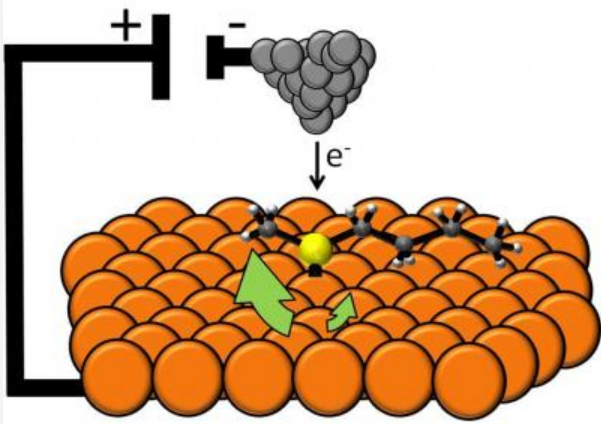
Chemists at Tufts University‘s School of Arts and Sciences have developed the world’s first single-molecule electric motor, which may create a new class of devices used in medicine and engineering.
It measures a mere 1 nanometer across (the current world record is a 200 nanometer motor).
Saturday, 30 July 2011

6 Futurecasts to think about!
Forecast #1: The Race for Genetic Enhancement Will Be What the Space Race Was in the 20th Century—Genetic therapies and biomedical enhancements will be a multibillion-dollar industry. New techniques will enable doctors to change your DNA to revitalize old or diseased organs, enhance your appearance, increase your athletic ability, or boost your intelligence.
Forecast #2: Water Becomes the New Oil—Water desalination may soon become one of the world’s largest industries. By 2040, at least 3.5 billion people will run short of water—almost 10 times as many as in 1995. The huge demand, plus new more efficient desalination technologies, will create enormous profit opportunities and bring new life to arid regions.
Forecast #6
Invention Becomes Automated

This technology has already designed a successful antenna for a NASA space mission and invented innovative consumer products. It promises to spark a revolution in innovation and allow non-technical people to become inventors.

Forecast #3: WiMAX Networks Will Soon Create Country-Wide Wireless Internet Access—Often described as “Wi-Fi on steroids,” WiMAX (Worldwide Interoperability for Microwave Access) will cover entire countries with a vibrant, high-speed wireless communications network. Internet access and other data and video applications will be available anywhere with many applications for automobiles.
Forecast #4: By 2025, the Worldwide Average Life-Span Will Be Extended by One year Per Year—Only 15% of deaths worldwide will be due to naturally occurring infectious diseases.
Forecast #5: Bioviolence Becomes a Greater Threat—In the next decade, biological technologies that were once at the frontiers of science will become available to anyone with minimal scientific training. Emerging biotechnologies, such as genomics and nanotechnology, will allow bacteria and viruses to be altered to increase their lethality or make them more resistant to antibiotics.
My concern is that most people, governments, and news media know little to nothing about these and many other breakthrough trends! Wake up of you'll be left behind.
Any guesses what the picture in the right-hand corner is about? More next week!
Wednesday, 27 July 2011

Un-Rules For Creativity.
1. Avoid rules. Avoid order. Don't just embrace chaos, but create a little bit of it. Constant change, from the top-down, keeps people nimble and flexible (and shows that you want constant change).
2. Give yourself and your team permission to be creative. Permission to try something new, permission to fail, permission to embarrass yourself, permission to have crazy ideas.
3. Hire weird people. Not just the tattoo'd and pierced-in strange-places kind, but people from outside your industry who would approach problems in different ways than you and your normal competitors.
4. Meetings are a necessary evil, but you can avoid the conference room and meet people in the halls, the coffee m/c, or their car. Get out, go on hunter-gatherer knowledge/idea/experience expeditions (foreign countries, out-there expos, futurist events). Make meetings less about delegation and task management and more about cross-pollination of ideas (especially the weird ideas). This is a lot harder than centralised, top-down meetings. But this is your job; deal with it.
5. Structure your company to be flexible. Creativity is often spontaneous, so the whole company needs to be able to pivot quickly and execute on them (see #1).
Saturday, 16 July 2011
 New Idea!...The Devils’ Advocate!!…. Not!!!
.
Why should you not assume the ‘Devil’s Advocate’ during a creativity session or when a new idea is first proposed?....
.It’s often put forward when a new idea is shed, ‘Let me for a moment be the Devil’s Advocate.’
.So....why should you not allow that to happen?
.Because it assumes the most negative possible perspective, one that sees only the down side, the side, the problems, the disasters in the wings. And when that happens the rest of the pack follow suit, in turn adopt the killer instinct, and the new idea is drown in negativity.
.So, if any one does say, ‘Hold on a moment, let me play Devil’s Advocate.’
.The replay could be along the lines: ‘Well, I would welcome you to play an Angles Friend!’

Phone Hacking was not only inevitable given time, this is merely the beginning....But here’s a solution that may begin to address the problem!
Modern mobile phones are no longer phones!
In fact, the gadget we hold in our hand has now become a very powerful computer systems.
The device in question now includes such technologies as: operating systems, read-only-memory, high level and smart software, intelligent applications; along with the traditional kit that allows us to communicate around world at a press of button.
But most importantly, these electronic tools contain evermore powerful databases. Databases that are exponentially increasing in data storage capacity and flexibility.
And this is central here.
The databases hold much of the data about our personal lives. And as has been made clear in the news these past weeks, they are beginning to open to caldensdined factions.
Further, you can bet that those malevolent gangs and juvenile delinquents will begin to launch software apps that make remote Hacking ever easier.
Remember, a mere 10 years ago, cell-phone technology at this level of sophistication didn’t exist. And in as little 5 years from now the level sophistication in Smartphones (as we know them) will be orders of magnitude more powerful.
The phone will be a supercomputer in your grip.
Think of this: 40 years ago, the American early warning defence system, the Q7 Mainframe, took up the area the size of a football pitch. It had a huge, deep underground, temperature controlled, environment to accommodate it. A high-tech staff of many hundreds to control and support it. And the cost of design and maintainance of such a system took many billions of pounds.
Today, we have Smartphones! Smartphones in local shops that have 10,000 times the computing power of the Q7, and all for the price of £300.
And that’s the speed of the change!
You can perhaps see – just as with the long-established Personal Computer connected to the Internet – Hacking is going to spread rapidly into the public domain via the roughly 3 billion (so far) Smartphones that are out around the planet.
As I said, this was inevitable given time.
One solution is not to carry a Smartphone. But to uses a basic phone, and then too have a completely independent, not connectable, old fashioned device that can be used as a sophisticated database.
An even better technical solution to the Hacking Problem.
In fact, if Apple, Samsung, and the like, got their design hats on, they could readily design a Smart Communion Device with ‘3 Separate Systems in One Unit’ that would go some way to solving the problem.
As follows:
System 1 is the phone system, and there’s no reason way you cannot download functional applications like music, games, pictures, videos, etc, into this first system. This is because this information is either discreet (as in careful what you say) or innocuous data.
System 2 is the data message receive/send unit. This system can be secured via Public Key Encryption Algorithms (technology that give you the ability to authenticate data, keep unwanted information locked out. And data that can be securely sent to another peer.) Messages and media such as telephone numbers, personal messages, Facebook sessions, Groupon accounts, et al, can be securely stored.
System 3 is your physically separate multimedia database where you can store your privet records, where no one can get into the files, folders or accounts (as long as you use your P.I.N security lock). Nobody can get in because it is isolated electronically, magnetically and mechanically to the outside world.
It will mean that you will have to transfer long-term records (e.g.; recently received phone numbers, e-mails, diary accounts, etc) manually. But the price of doing this will be worth it. You will have a range productivity apps, like write to screen, diary, notebook, camera, video, etc. But only you will be able to view and download to local devices.
Conclusion.
This will impede the potential theft of private and personal records, and therefore the further networking of salacious gossip; hinder the leaking of family and work information; put a road block on information based business espionage – and I have to say – prohibit the future disclosure of government and domestic security information.
Saturday, 18 June 2011
 If data drives decisions, measurements drive data. That’s why managers and business owners love metrics.

We use — and sometimes overuse — metrics to quantify profitability, return, productivity, efficiency, quality, etc.
But the metrics we use, should provide an objective score of results.
Should provide an objective score, but not always. Here’s an example.
I was in consulting at manufacturing at a production facility. Productivity was all-important, driving a number of performance and financial results. But productivity could be measured in many different ways.
Take throughput, a commonly used productivity metric. Throughput reflects the number of units produced per some period of time. If you produce 29,000 widgets in 8 hours, your throughput is 3,625 widgets/hour. Clean and simple.
Also misleading. In that business, throughput was almost meaningless as a metric.
Why? Say you manage a call center and the number of calls a sales rep makes is a key metric. (You assume the more calls made the more sales since in your business sales is in large part a numbers game.) Because your reps are cold calling prospects, call duration ranges from seconds to twenty minutes or more. Measuring call throughput over a long period of time — say, the average number of calls made per month — could help smooth out natural variation in call length and provide a relatively accurate reflection of a salesperson’s call productivity.
Maybe.
As a short-term metric, though, throughput results could be very misleading. The same was true at the plant above. The product was the printing of books. They ran thousands of book titles a year of widely different run lengths. Some run quantities were under 2k, others over 500k. Running a number of jobs with small quantities during a shift automatically decreased throughput, since changing from job to job took time. The more jobs run in a day, the lower the throughput — even if the crew was incredibly efficient.
So we measured run and makeready results separately, using two simple formulas:
Makeready average = total makeready time / number of makereadies
Run average = total books produced / total run hours
For example, during a shift a crew may have run 3,800 books per hour at an average makeready of 24 minutes.
Sound good? Not so fast. Comparing results, either between crews or over time, was a problem. Which is better:
3,800 books per hour and a 24 minute makeready average?
Or
3,750 books per hour and a 22 minute makeready average?
If you can’t answer the question, don’t worry, we couldn’t either: not without doing some maths, whether a slower run average and a faster makeready average was better than a faster run average and a slower makeready average depended on each crew’s total number of makereadies.
Worse, the crews knew that, so they would manipulate results, writing down slower or longer makeready times as they saw fit to manipulate results. While a shift always added up to 12 hours, how time was actually spent during that 12 hours was open to manipulation.
Instead of attempting (and probably failing) to enforce more accurate reporting, we created a metric we called adjusted books/hour (ABH).
Here’s how it worked:
Our makeready goal was 20 minutes, so every time a crew performed a makeready they got credit for a 20-minute makeready, regardless of how long that makeready actually took. If they had 3 makereadies during a 12-hour shift they got 60 minutes of makeready time. The remaining time was considered run time and was divided into the total books produced to determine ABH.
Here’s the formula:
ABH = total books / (total run time - (number of makereadies times 20 minutes))
Here’s an example. Say a crew had 6 makereadies and ran 29,000 books during an 12-hour shift. 6 makereadies times the makeready credit of 20 minutes equals 2 hours of makeready time. That reduces the total run time to 10 hours, and 10 into 29,000 equals 2,900 ABH.
The ABH metric gave us a straightforward way to evaluate performance trends and compare crew-to-crew performance. If crews performed makereadies faster than 20 minutes, great — they had more run time available and could run more books. If their makereadies took longer their ABH suffered since they had less actual time time to run books.
(Keep in mind we tracked actual performance on makereadies so we could spot areas for improvement; we just used ABH as an apples to apples metric.)
Take a look at what you measure:
Do some metrics leave room for interpretation?
Can some metrics be manipulated by how and when data is collected?
Do your metrics truly measure what is important to your business?
If not, think of ways to create your own metrics — especially if custom metrics make it easier for employees to evaluate their performance.
Measuring is important, but measuring what you need to measure — and measuring it the right way — is critical.
Friday, 6 May 2011
 Robot Seagull! Amazing!!!
A new lifelike seagull ‘bot is one of the most realistic bio-inspired flight machines I’ve seen.
SmartBird takes off, flies and lands on its own, flapping its wings and turning its head and tail to steer. It is modeled on the herring gull and its appearance and movements are uncannily similar to the real thing.
Designed by the German firm Festo, which also brought us the elephant-trunk-inspired robotic arm and the autonomous robotic jellyfish, SmartBird is Festo’s newest entry in its Bionic Learning Network program, which involves several universities in the U.S. and Europe and aims to use nature as a model for mechatronic systems.
The bird has a 6.5-foot wingspan, so it’s much larger than a real gull, but it looks pretty much like the real thing, as you can see in the video below.
SmartBird flies like a seagull thanks to an active torsion system combined with a complex control system. Its wings each consist of a two-part arm wing spar with an axle bearing on the torso. The wings and tail are the only mechanisms creating lift, and Festo engineers had to figure out bird flight in order to do it.
The company explains: 'First, the wings beat up and down, whereby a lever mechanism causes the degree of deflection to increase from the torso to the wing tip. Second, the wing twists in such a way that its leading edge is directed upwards during the upward stroke, so that the wing adopts a positive angle of attack.'
The tail acts as an elevator and rudder, stabilizing the bird in straight-line flight and helping it change direction. Here's how it works:
Friday, 25 March 2011


For those that know me, you’ll know I’ve been banging on about the Six-Sigma for over 2 decades. In the last decade, any reputable Manufacturing company will have adopted (or at least attmped to adopt) the miracle 'princples' that - if applied correctley - radically reduces 'defect' along a whole list of business critcial endevours.
This can be achieved by:
Reduction of variations in processes.
Measuring, analysis, improvement and control of processes.
But something new is happening.
Professional firms – law, finance, retail, liesure, public transport, consulting, even Buckingham Palace, are begining to build client relationships using the Six Sigma principles.
Why?
In the main, because Six Sigma is the language that clients are talking and they are attracted to professional firms that employ the program.
I was astonished to learn that several leading service businesses are already using Six Sigma principles, which Motorola invented and GE made famous. The law firms are keeping it secret that they’ve adopted Six Sigma, because it’s such a huge competitive advantage.
Here’s my expose as to the private service firms that have done so:
Virgin Atlantic.
Powell, Goldstein, Frazer & Murphy. American Express.
LLP King & SpaldingLeBoeuf.
LambGibson.
Wal-Mart.
DayMorgan.
LewisArmstrong Teasdale.
London Transport.
Goodwin Procter.
To expand here, a professional firm will actually employ Six Sigma, which is designed to engage customers in a collaborative dialogue, drive joint business improvement projects, and drive sustainable, strategic relationships with key clients.
.
And this, as many will have experienced, is a major culture change for law, and many other professional servcie, firms.
But for those of you looking for a short cut, here’s some Six Sigma terms you can throw into a conversation:
The Big Y: this refers to business results that matter, a company’s prime goals.
The company’s X’s: these are the activities that will enable a company to achieve its goals.
Green belt or black belt: levels of expertise at Six Sigma.
3.4 defects per million opportunities: this is the definition of Six Sigma.
DMAIC: For processes that are in place, the 'Define Opportunities, Measure Performance, Analyze Opportunity, Improve Performance, Control Performance,' methodology is used.
.
DMADV: For inventing new business processes, the 'Define, Measure, Analyze, Design, Verify' methodology is used.
Innovation workshop: gather senior partners/exectutives of your firm in the same room with top executives at the client company, and getting the executives to 'open-up' about the metrics that drive their business, what drives their customers, understanding the client’s current processes and prioritising potential improvements. The meeting takes about 3 hours.
Obviously, I’m cramming an entire process into one short post, but for more on Six Sigma.
Click and read the introduction to 'Six-Sigma Beyond the Factory Floor,' by Ron Snee; or for a good intoduction take a look at Tom McCarty’s book The New Six-Sigma.
Alternatively, for overview, click these wiki-site on Six-Sigma, or Design for Six-Sigma.
.
For Six-Sigma training for Service Companies, see Silicon Beach.
Tuesday, 22 March 2011
 One of innovation’s ‘Magic Gifts!’
I was asked the other day as to whether ‘listening to customers is a good thing?’ That is, should organisations listen and building their clients wishes and demands into their product/service/experience/ performance, etc?
.
I paused for a moment… Then replied ‘Not exactly!’
.
‘WHY???’
.
Because that’s just the tip of the issue!
.
‘Listening’ is reactive, and therefore too often lagging and off centre. It’s also retrospective, relying on people’s actual experiences.
.
Further, ‘asking’ people what the want – even with quite sophisticated methods – is hit and miss; as different people have different moods at different times; have short-term-detail memories; have a stupendously broad range of personalities, and even have quite weird subjective experiences with the gizmo or venture they’ve parted hard earned money for.
.
So, don’t listen to customers, but DESIGN THEM A GIFT!
.
‘What the fuck are you on about?’ my pal affronted.
.
Well, have you ever given a ‘GIFT’ to a friend you know extremely well? And immediately their eyes open wide, go bright with joy, and the atmosphere of the room goes warm and exhilarating?
.
‘How did you know’, they screech, ‘how did you know?”
.
And that’s the job of the innovator. To know their customer so intuitively well, that when they launch a new brain child, the customer-base reacts in a similar – metaphorical - way. They love it, and the market goes high.
.
So, to do that, the innovator has to build acute customer empathy; learn their habits and patterns; discover their values and likes in their world, even their dislikes! And by thinking and behaving in this way, you’ll find that building empathy happens very quickly. And when that happens, your chances of getting a winner sky rockets.
.
SO DESIGN AND BUILD YOUR CUSTOMER A MAGIC GIFT!
Sunday, 6 March 2011
 3 Principals of Technological Evolution.

1) All Technology Improves in Price-Performance Until its Life-cycle Inflection Point. An inflection point is a point on a curve that changes from being concave upwards (positive curvature) to concave downwards (negative curvature), or vice versa. If one imagines driving a vehicle along a winding road, inflection is the point at which the steering-wheel is momentarily ‘straight’ when being turned from left to right or vice versa. And this turns out to be a key principal in technological evolution.
Take the humble telephone. In my lifetime I’ve seen it transform from a quite dumb, very limited, land-tied piece of equipment to an amazingly intelligent mobile machine that enables me to communicate voice-video-data around the world instantly. Whilst the end-price point has continued to remain stable at each stage of advancement.
Only, technological improvement hits a plateau, when novel, often unforeseen tech’ begins to emerge. Hence:
2) Game Changing Technology Turns Up When Least Expected. A complexifying world means more new possibilities with greater opportunities. And that means greater novelty is abound, which in turn means new, often surprising technologies that cause tremendous structural shifts compromising the current standard.
However, it is often on the fringe that these Game Changers occur or emerge. To wit: 3D-TV is rapidly becoming the big new thing.
But what is likely to outgun this tech’ in next to no time? Look at Immersive Holographic Displays, or 4D Nearfield-Infrared Scanners, or GigaNet Bandwidth, or Thinfilm ‘Superflat’ Displays, or 3D Hyperthreading Microprocessors. This lot will sooner, rather than later, change the rules of the game! And all out of the line of sight of most TV manufacturers.
3) As Technology Becomes Increasingly User-Friendly with Greater Functionality, it Continues to Complexify on the Inside. Think of the TV once again? It’s burgeoned tremendously in functionality over the last 2 decades. But to achieve this expanse, evermore and different technology is packaged inside the same or smaller volume of space. Pharmaceuticals, another example, embed deeper complexity. The latest drugs are designed via so-called non-rational design techniques, resulting in synthetics molecules approaching that found in biology. To be sure, the future of technology is smaller and more refined beyond the nano-scale, with ever greater functionality and interconnectivity.
Subscribe to:
Posts (Atom)