Author, Speaker, and Consultant on Hyperinnovation, Future Studies, GigaMarket$, The New Industrial Revolution, and Advanced Robotics and (iRev) Intelligence Revolution.
Tuesday, 8 January 2013
12 Exciting Innovations from 2012
2012 was a great year for innovators. From solar soccer to poop power, inventions, innovations, and ideas for changing the world sprouted like daisies. Here's a list of some green technology you might have missed:
1. Recharge from a Distance: Wireless power can be transmitted under roads to electric cars, and rechargeable batteries can get a boost from anywhere in the house.
2. Solar Soccer Ball: The Soccket is a soccer ball that can generate and store energy when it's kicked.
3. Manure into Gold: Manure from cows can be "digested" to make heat, electricity, animal bedding, and fertilizer.
4. Solar Incubator: In poor countries without access to the grid, solar-powered incubators can save infants' lives.
5. Mud-Powered Fuel Cell: Aquatic mud is full of microbes, and a new fuel cell can tap their metabolism for electricity. This could power swimming robots.
6. Rotating Solar Panels: The SunSaluter can track the sun across the sky without using electricity, boosting its energy production.
7. Ocean Energy: Energy can be produced using the difference between shallow warm and deep cold water. Also: Natural home cooling from the depths of the sea.
8. Sony's Bio Battery: Enzymes from the bacteria that live in termites can be put into batteries that run on shredded paper.
9. Robotic Sailboat: A feel of fuel-less, autonomous sailing robots can study our oceans, tracking temperature, pollutants, and more.
10. Train Power: Trains are using new technologies, like installing mini-wind turbines into the rail tunnels, to capture extra energy from fast-moving vehicles.
11. Guts to Glory: The bacteria that help pandas and elephants digest cellulose could also make cellulosic ethanol more efficient.
12. Fitness Fuel: Ecofit exercise machines can be hooked together to produce electricity, with a user-friendly interface.
Stephen Wiltshire
illustrates entrancing art work
We all know
that profoundly original and inspiring breakthroughs in art is a precious
rarity. And that there have been gifted artists around for millennium. However,few match the the dons such as the ancient Chinese impressionist Zhan Ziqian to the works of Leonardo da VinciLaGioconda to Rembrandt,
Picasso and some might say latter day Damien Hirst and his progressive avant-garde eclectic
mixology.
But I watched a young 10 year old boy about 20 years ago on a BBC documentary. I could have hardly forgotten, yet I had not heard until now.
Autistic artist Stephen Wiltshire has put together spellbinding 18ft pictures of New York from MEMORY, after a 20-MINUTE helicopter ride over city!
The
unbelievably intricate picture was drawn at Brooklyn’s prestigious Pratt
Institute from Stephen’s memory, with details of every building sketched in to
scale.
Take a close look!
Monday, 7 January 2013
Mashableintroduces10 of tech's top innovators.
From adaptive learning to mobile video-sharing and computers that you command with gestures of the hand, these gamechangers are introducing new technologies and redefining — or creating entirely new — industries.
Check out the summaries below and click through for full articles about these innovators and their work.
"Education is a big problem," saysKnewtonCEO Jose Ferreira. He's spent his whole life in the education space, starting atKaplanin 1991. He tried to bring adaptive learning to Kaplan in 1993, but Ferreira was ahead of his time; once technology caught up, he founded the adaptive learning platformKnewtonin 2008.
Education might not be the sexiest of industries, but it's a $7 trillion global industry that's ripe for innovation. To date, Knewton has received $54 million in funding to build its Adaptive Learning Platform that helps you learn better by responding to what you do and don't know, personalizing the content that's served to you based on data collected about your learning habits. In short, Knewton enables smarter learning. "We use data to make your education better, that’s it," says Ferreira.
Viddy, a two-year-old, 20-strong startup based out of Los Angeles, has recently emerged as one of the potentially big players in the mobile social video space.
"We've spent a lot of time really optimizing the technology in order to render the video quickly on devices," says co-founder JJ Aguhob. "Obviously we felt there was some value in actually seeing the creativity, seeing the process unfold. You really put your heart into it, and then you can see the rewards and benefits of creating really great content."
Since Steven Spielberg expertly crafted it a decade ago, the world has been clamoring for a user interface similar to what was found in sci-fi thrillerMinority Report. Even the inkling of flipping through applications and swiping screens in mid-air made geeks tingle all over, but aside fromexpertly developed hackson theXbox Kinect, nothing definitive seemed to break through and truly give the public that enticing functionality of the future.
That is, until now. After more than five years of development, a proprietary technology has emerged that synthesizes the shape and movement of the human hand to produce movement onto a computer. It's called The Leap — and for an astonishingly low price of $70, you can begin to control a computer with nothing more than your hands, as early as next February.
With an astounding 72 hours of video uploaded toYouTubeevery minute, not all clips are going to be decent quality.
Thankfully, YouTube offers aninnovative toolthat can “magically” fix videos that are shaky, or suffer from poor light levels, with just one click.
This tool, called Enhance, was not created overnight, but was the result of years of development from a team of dedicated Google engineers.
Rushabh Doshi, tech lead and manager of the YouTube Editor team, explained the product's origin, inspired by his own snowboarding videos.
"I pitched the idea to my engineering director who was skeptical, but supportive," says Doshi. "He said: 'I don't know if you're going to be successful, but we should give it a shot.'"
Data is having a moment. Analytics are sexier than ever before, and metrics are drive decision-making and thus, boosting revenue. Not surprisingly, there are lots of data tools out there to parse your referral traffic, pageviews, time on page and more. But some people need to know what's happeningnow, how they can improve trafficimmediately. That's where real-time analytics comes in, and if you ask CEOTony Haile, that's whereChartbeatdominates.
Chartbeatwent into beta on April 2, 2009. Today, it's a 33-person team, and a product used by tech and publishing heavyweightsFoursquare, theWall Street Journal, Time andGilt Groupe.
“This is the pulse of your company in real-time," says Haile.
In tech, apps come and go. Anyone working in publishing in the 1990s and early 2000s saw Aldus PageMaker give way to QuarkXPress, which eventually ceded to Adobe InDesign. No matter how good any app may be at a given time, technology doesn't stop advancing, which in turn changes people's needs. That opens up opportunities for more nimble competitors to win over customers with apps that better serve those needs.
Until recently,Microsoft Officehas been fairly immune to this cycle. But, the rise of mobile devices and cloud computing allows competitors to chip away at the Office empire. Many people now turn to free and mobile-friendly alternatives, likeGoogle DriveorQuickOfficefor building documents, spreadsheets and presentations.
But there's a reason Office was the go-to productivity software for more than two decades:Microsoftcan adapt. And it's doing so in a big way for the next version of Office, calledOffice 2013, which works hand in hand withWindows 8, set for a big debut this fall. Windows 8 re-invents the computing experience for touch screens, social networks and the cloud — and the new Office takes full advantage of that modern tech trinity.
With mobile payments projected toreach $1.3 trillion by 2017, the industry is filled with a lot of players — Google Wallet, LevelUp, PayPal to name a few. Just last month, Venmo wasacquired by Braintreefor $26.2 million, and the company processes $10 million each month.
The free, friend-to-friend mobile payment platform launched in 2009, and is now available oniPhone,Android,BlackBerryandweb, with integration via Twitter, Facebook and Foursquare.
We asked Andrew Kortina, co-founder of Venmo, about the mobile payment space, how Venmo trumps the competition and whether it plans to go beyond reimbursements among friends.
With everyFacebook"Like" and public check-in toFoursquare, consumers contribute to a widening pool of social data — data marketers are beginning to capitalize on with more targeted and contextually relevant advertising.
Nihal Mehta, CEO and co-founder ofLocalResponse, recognized this opportunity early. LocalResponses leverages a vast amount of social data, most of which comes from Facebook and Twitter, and combines it with language processing to surface intent and serve ads based on that intent. For example, if a person named John were to tweet “I’m hungry,” from Twitter.com, LocalResponse could serve a display ad for Pizza Hut on the next CNN.com page John opened in Safari.
"A phone knows who you are, where you are and where you've been. But no ad platform was taking advantage of that [at the time]," Mehta recalls.
For more than a decade,Verisign, Inc.— the registry operator for .com, .net and other top-level domains (TLDs) — has been connecting people to the websites that shape the world.
This means every time you type a .com or .net web address into your browser, it sends a “query” to Verisign’s servers to locate the website’s Internet address and enables your computer to connect to the site. It also provides security and network availability to keep sites online even during peak traffic conditions and large cyber attacks.
With more than seven million new domain names added to the web in the first quarter of 2012 — bringing the total number of registered domain names to more than 233 million worldwide — the Internet is gearing up for more innovation. But with that also comes the need to protect web users from the growth of cyber criminals likely to creep up in the next few years.
The promo video on thePebble Kickstarter pageshows a man wearing the watch while doing dishes; he just looks at his wrist to see the number of the incoming call. In another video example of Pebble's usefulness, a woman is running and simply switches songs on her iPhone by clicking the watch rather than taking a bulky-by-comparison phone out of her pocket or purse.
The device doesn't create new apps, but uses existing ones on your smartphone. It grabs your music, apps and even alerts you to incoming calls with the number appearing on the screen, and shows text messages.
With a battery lasting seven days, a glare-proof e-paper screen and Bluetooth capabilities, the demand for this watch quickly surged after its Kickstarter campaign launched in April. Eric Migicovsky and his team of six developed Pebble and launched anamazingly successful Kickstarter campaignthat raised $10.6 million — its goal was $100,000. Ironically, the groupcouldn't find fundingfor their watch at first.
A company working out of Menlo Park, CA, is building an R&D platform for robot developers. Where as software developers have uniform program protocols and languages to share ideas and programs (HTML, JAVA, C++); when it comes to robot development that's a little harder. As it's extremely expensive, and, well, a-lot more too-it!
The goal at Willow Garage, is not to completely own or control proprietary technology; but put pedal to the metal and accelerate it with thrid parties. Open source software innovation and clever flixible/customisable hardware is the key.
Their core mision is as follows:
Personal Robotics, Mobile Manipulation
Personal robot applications enable people to make themselves more
productive at home and at work.
PR2 combines the
mobility to navigate human environments and the dexterity to grasp and
manipulate objects in those environments.
Community
PR2 allows you to concentrate on your specific field, while taking
advantage of the work of specialists in other areas.
The PR2 hardware platform and 1000+ software libraries enable you, as a
member of the community, to focus on new capabilities.#
The common platform
also lets you easily share your research results in a way that is reproducible.
Freedom to Innovate
The PR2 is an open platform. You can change the system to meet your
needs at any level.
PR2 is designed to
be durable so that you can experiment with new ideas and applications directly
on the robot.
Frog Designhas graciously shared their 20 technology trends for 2013, which includes the usual suspects such as main streaming of 3D printing and the further humanising of technology. No big surprises, but still a good read anyway. Enjoy!
Unrestrained commerce. Soapboxes for every possible voice. Loud, endless arguments. False identities. Hidden agendas. Regulators chasing after the latest innovation. People thrown together in explosively novel, sometimes threatening ways, in a place where the rules of normal society don’t seem to apply.Welcome to an early17thCentury marketplace. Replace the corsets with computers, and throw in regular bathing, and you have our experience of online conversation and commerce.
As I sit here pondering the last few days of the year, I’m struck by how the more things change, the more they stay the same.
In fact, every generation thinks it lives on the cusp of a future that’s exceptionally unique. I grew up expecting to fly a PanAm space shuttle and sit on Scandinavian art chairs at the orbital Hilton. But then the future happens, and it looks a lot like the present. Time and place change, but what we do tends to stay the same. Replace newsreaders and IM with Victorian stock quotes and love letters in Morse Code, and there appear consistent behaviors, irrespective of differences in technology.
So my bet is that 2013 will look a lot like 1613 when it comes to how we interact with one another. Here are three predictions for next year:
First, communities will become meaningful, or they’ll disappear. Guilds were partially an organizational substitute for prior feudal communities run by nobles lording over serfs. Trades emerged during the Renaissance to harness application of new technologies, and unions organized to address changing social structures during the Industrial Revolution. All of these groupings got ever-harder to join, and required things of its members in exchange for real benefits (including dues).
Most brand online content creation strategies are ignorant of this history, since they’re focused on manipulating what marketers believe consumerswant instead of defining and providing things theyneed. The past suggests that there’s no such thing ascommunities of consumers who want relationships with brands, but rather communities of people who may (or may not) do things like produce or consume stuff. Everything else is a glorified distribution list.
Prediction: While lots of cash to get wasted in 2013 on beautiful and funny social campaigns that nobody really cares about, look for emerging brand voices that understand this truth.
Speaking of communities, I wonder if Facebook, Twitter, Pinterest, and the other services in the online engagement ecosystem will face a hard truth: their monetization models are based on using ads (in various forms) to exploit their users, as if in tacit recognition that they wouldn’t pay a dime for their community membership if asked. This is the huge weakness underlying these services that leads, in part, to why every action to make money off of users tends to crap out their experience (remember what happened to MySpace).
Prediction: The established social platforms will continue to struggle with ads and other tricks while new sites will emerge that are organized to accomplish things…and we might see people pay to be members of those communities.
Second, mobs get replaced by order. The idea of self-regulating commerce (or conversation) has fascinated theorists forever (Ben Jonson’s play Bartholomew Fair toyed with the issue in 1614). Yet each time a free-for-all marketplace has emerged, people have developed objective authorities to manage it. Mobs blow up institutions and then build new ones.
I maintain that nobody finds more value in anonymous opinions online, but rather those curators of taste and recommendations are less valueless than the biased and untruthful spin that brands have been throwing at us for decades. Only we’re discovering that they are just as biased, if not more so. Pinterest has to cull a fifth of its accounts because they’re ersatz. Lots of product reviews are either “sponsored” or simply the creation of crazy people. Twitter followers can be bought in bulk, and most bloggers can be bought off in one way or another (and all march to their own, usually opaque standards and intentions).
Prediction: 2013 will see more disclosures of spin or outright manipulation of social platforms (and by individuals), and perhaps the emergence of real, transparent accountability standards for content creators. The days of anyone being an expert on anything could begin to wan?
Third, even the best theories return to reality. Practice has never lived up to the expectations of theory, yet the last few years have been filled with new marketing experts explaining the way things should be, especially when it comes to online behaviors. The very idea that any brand (or institution) should have a “social strategy” is laughable, considering every communications activity — if not operational actions overall — has been social since the first caveman oog’dthrough a hunting story by firelight. The only reason we talk about it differently is because there’s a loud and talented lobby telling us to do so.
After all, even those of us most intensely addicted to our smartphones still spend our lives in geophysical reality, and therein have a variety of other experiences, many of them mediated in one way or another. Maybe we don’t need special stand-alone social activities or components to marketing strategies…but rather a rethinking of operations and communications, taken together, as social behaviors? If we stopped talking about “social” and “digital” as if they were synonyms, it might really whack spending on consumer-facing technology platforms.
Prediction: Naw. The Social Media Industrial Complex took years to build, and it will continue to advocate successfully for more sign-ups and ways to get everyone to spend more time using its platforms (which make money therefrom, whether in outright development sales or that ad exploitation I noted above). Look for truly bold brands to do things like disband their social groups and embed them back into their marketing organizations or, even better, distribute them throughout their operations. Perhaps the best examples of marketing in 2013 will come from campaigns that aren’t described as “social?”
I truly believe that lots of what we observe isn’t really new as much as it is new to us. Four hundred years ago, some kid wearing ruffles and an uncomfortable codpiece saw a new, unprecedented future filled with change emerging from the chaos of an open-air marketplace that today is a paved-over parking lot. He just didn’t have a blog to narrate it.
When we try to understand the function and implications of experiences like online communication, we risk missing deeper truths — and actionable observations — because we’re enamored with the uniqueness of our own experience. My predictions for 2013 will be less overt than apparent to those of us who keep on the lookout for hints of real change.
We’re not the first ones to seek such clues. Happy New Year!
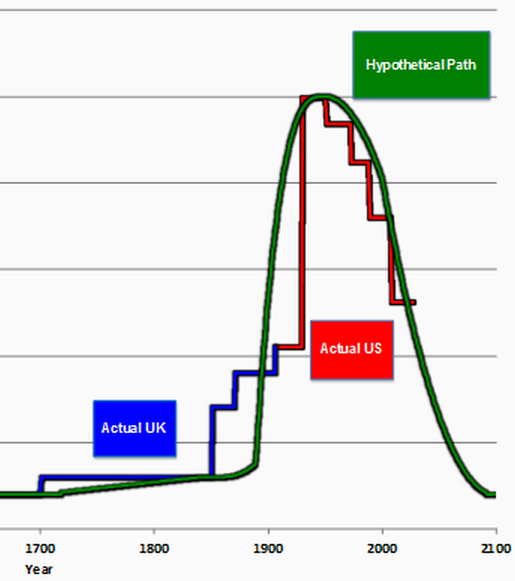
'Global growth from the current industrial revolution (computers, the web, mobile phones) is slowing — especially in advanced-technology economies, and long-term economic growth may grind to a halt, Robert J. Gordon, Stanley G. Harris Professor in the Social Sciences and Professor of Economics at Northwestern University, has argued.
Now economist Paul Krugman counters in The New York Times that we are moving toward a…' (click on links to review articles)
The Tech Innovators Series is supported by Lenovo. Lenovo does not just manufacture technology. They make Do machines -- super-powered creation engines designed to help the people who do, do more, do better, do in brand new ways.
What's worse -- your smartphone running out of battery life, having to carry around a charger or not being able to find a power outlet to charge your phone when you're on the go?
Frankly, all of these situations are the pits. That's why wireless power pioneer Powermat is doing all it can to solve the on-the-go charging problem and make wired charging a thing of the past.
Mashable spoke with Powermat CEO Ran Poliakine about the company's technology and where it is going. Read on for a look at how he and his team are innovating in the wireless charging space.
A Mission To Make Wireless Charging Pervasive
Poliakine says that Powermat's mission has always been the same, that mission being:
"To create a wireless world where access to wire-free power is as pervasive as Wi-Fi -- a world where you expect to have wireless energy at your fingertips with Powermat technology at the core of the wireless power revolution."
"It all began with a simple realization that we are a society increasingly on the go and increasingly reliant on our smartphones for everything from keeping us connected, to providing us with news, entertainment, navigation and even waking us up in the morning," says Poliakine. "With this seemingly relentless increase in wireless data and 'power hungry' devices, it made no sense to me that we were still tied to our cords and chargers for power delivery. If our devices are wireless why isn't our ability to charge them?"
How Does It Work?
Powermat's technology stands firmly on the shoulders of giants like Nikola Tesla, who pioneered wireless energy transfer at the turn of the century. Powermat used Tesla's research as a basis for its own experimentation and development and came out on the other side with its own "supercharged" method for delivering wireless energy, says Poliakine. He explains in detail exactly how the wireless charging station works:
"Powermat works by utilizing magnetic induction to transfer energy. Specifically, energy is transferred from a transmitter embedded inside the mat to a receiver (which is connected to or embedded in the device) through a shared magnetic field. For today's most popular smartphones, the receiver is built into a back door that mimics the look and feel of the original one that comes from the manufacturer. In the case of an iPhone, the transmitter is built into a Powermat-enabled protective case. The receiver requires only a one-time installation before the device can be dropped on the Powermat for wireless power transfer.
"Communication between the mat (transmitter) and the receiver (personal device) allows the mat to deliver an exact amount of power for the proper length of time so that the transfer of power is safe and efficient and no energy is wasted. When a device reaches full charge, power automatically shuts off to that device. This not only saves energy, but it also prevents overcharging of the device's battery, which can shorten battery life."
Expansion Through Partnerships
"We are the first company to bring wireless power to consumers in a widely available, meaningful way via mainstream retail channels," says Poliakine, noting that Powermat's technology can be built directly into electronics of all kinds but also into virtually any surface. As a result, Powermat is able to create wireless energy "hubs" within homes, automobiles, airports, offices and other venues.
To take advantage of its technology's scalability and versatility, Powermat is working with several partners to implement the wireless ecosystem, which will "bring us that much further along in our mission to create a wireless world," says Poliakine. Here's a sampling of the partnerships Powermat currently has in play:
Duracell: Procter & Gamble's Duracell and Powermat agreed to form a joint venture last month to globalize wireless power. The joint venture will combine P&G's strong consumer understanding, brand-building and go-to-market capabilities with Powermat's innovative technology, says Poliakine.
General Motors: Rollout of new automobile models that incorporate Powermat wireless charging capability will begin in 2012, with the 2013 Chevy Volt.
Teknion: Powermat and office furniture manufacturer Teknion created a line of wirelessly-enabled office furniture and accessories featuring an array of solutions for "smart" surfaces where users can drop and charge their favorite electronic devices on wirelessly enabled desks, office equipment and office seating solutions.
Arconas: Powermat worked with airport seating manufacturer Arconas to install free wireless charging stations in several highly-trafficked airports, including Chicagoís O'Hare, New York's LaGuardia and Toronto's Pearson International airports.
Overcoming Challenges
Pioneering the wireless charging space hasn't been a walk in the park for the Powermat team. Poliakine pointed to scalability and education as key challenges the company has faced along the way, largely due to the fact that wireless charging technology was a foreign concept when they launched. Poliakine explains:
"When Powermat first launched in mid-October 2009, we created the category. It didn't exist before us. That's a very unique position to be in since there are so many unknowns in terms of consumer response and adoption. In the first three months of retail availability, we sold in excess of 750,000 Powermat products, with most stores experiencing severe out-of-stock shortages late in the season. We knew then that there was a genuine market and need for wireless power.
"What we struggled with was the ability of our small company to educate consumers fast enough about the availability of wireless power and [to] take our technology beyond the scope of early adopters and technology enthusiasts to the mass market. We needed more muscle, credibility and global reach."
With the Duracell partnership under its belt, Powermat expects to expand its reach globally and better educate consumers about the technology.
The Future of Wireless Charging
"You can expect to expect wireless power to go mainstream," Poliakine says. "What that means, in simpler terms, is that you'll soon have wireless power in those places where you most need it, including your car, airports, hotels, coffee shops, offices and right in your very own home. In five to 10 years, wireless charging will be the norm. When you check into a hotel room, for instance, you will find it there and in many other places."
"This is the dawn of a new era for wireless charging industry overall, Poliakine continues. "I truly believe that it is no less of a game changer than the electric lightbulb was in its day."


 Since Steven Spielberg expertly crafted it a decade ago, the world has been clamoring for a user interface similar to what was found in sci-fi thrillerMinority Report. Even the inkling of flipping through applications and swiping screens in mid-air made geeks tingle all over, but aside from
 With an astounding 72 hours of video uploaded to
 Data is having a moment. Analytics are sexier than ever before, and metrics are drive decision-making and thus, boosting revenue. Not surprisingly, there are lots of data tools out there to parse your referral traffic, pageviews, time on page and more. But some people need to know what's happening
 In tech, apps come and go. Anyone working in publishing in the 1990s and early 2000s saw Aldus PageMaker give way to QuarkXPress, which eventually ceded to Adobe InDesign. No matter how good any app may be at a given time, technology doesn't stop advancing, which in turn changes people's needs. That opens up opportunities for more nimble competitors to win over customers with apps that better serve those needs.
 With mobile payments projected to
 With every
 For more than a decade,
 The promo video on the